
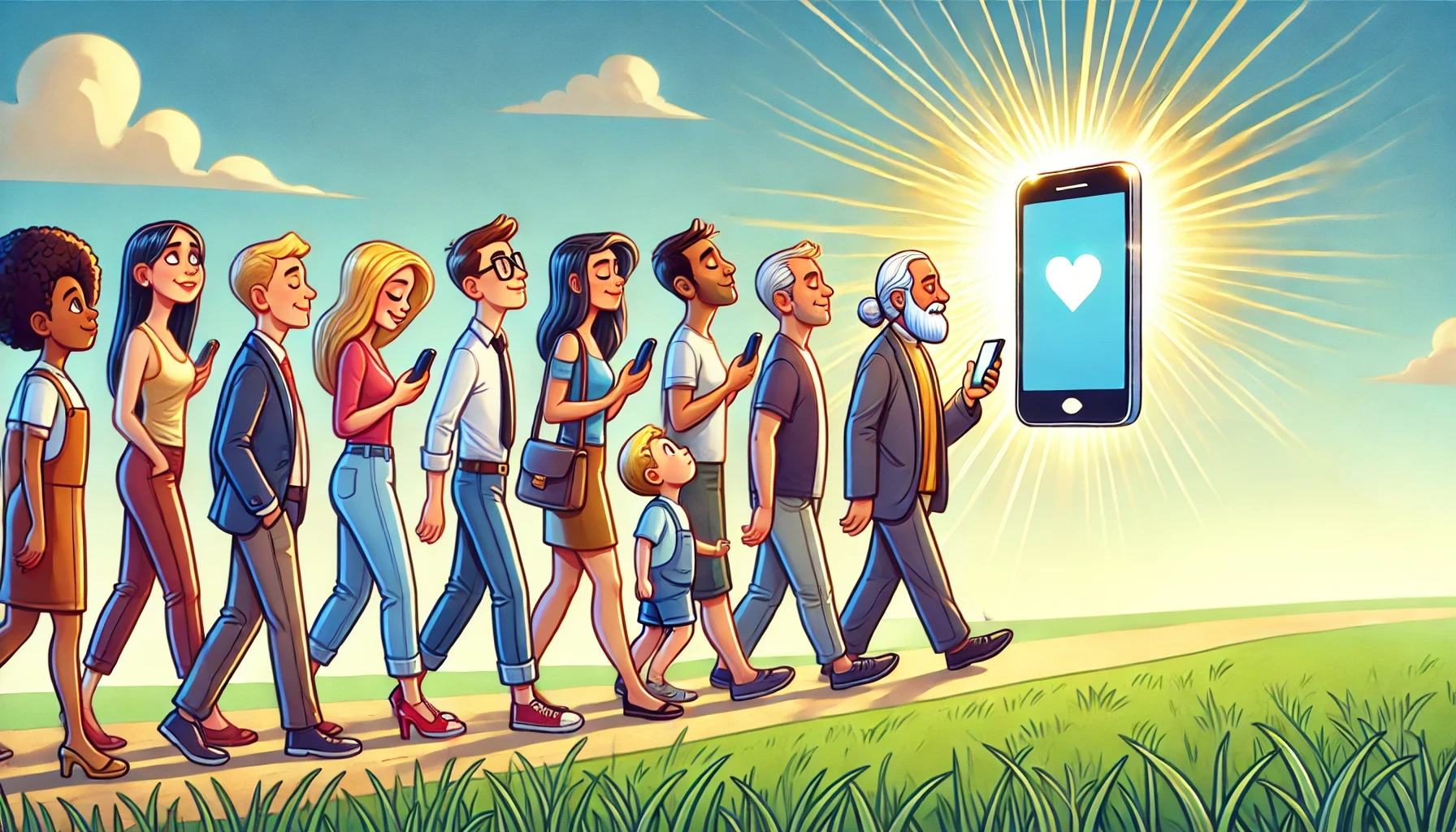
Why we all follow: What’s behind ‘yes, I’ll click that’ and what it means
Ever wondered why you hit “Follow” on someone’s Instagram profile, or why certain brands or influencers feel almost magnetic? It’s not just you. We humans are wired to follow. From ancient tribes to X trends, the psychology of following hasn’t changed only the platforms have.
Following is more than just tapping a button; it’s a reflection of deep psychological instincts, social behaviors, feelings and well-designed nudges that encourage us to engage.
Picture this: You’re mindlessly scrolling through social media late at night, determined to ignore every ad, post, or pop-up that wants your attention. But then you see it, the intriguing product that a thousand people have “liked.” Suddenly, your thumb hovers over the “Buy Now” button. You promise yourself a quick peek. Moments later, you’re congratulating yourself for snagging a deal you didn’t even know you needed.
Sound familiar? You’re not alone. There’s a whole world of brain wiring at play whenever we decide to “follow” someone or something, online or off. And let’s be honest, we’ve all experienced that nudge from a sneaky little friend called FOMO.
Why it matters
Following isn’t just about boosting someone’s vanity metric or fitting in with a crowd; it’s a behavior rooted in complex psychological mechanisms. From social proof (when we trust what others have tried) to herd behavior (moving with the group to feel safe), these instincts guide everything from our shopping habits to our political choices.
- Data speaks volumes: Recent findings from the State of Mobile 2025 report by Sensor Tower show that people spend, on average, 3.5 hours a day on their phones, and that number is rising. Every swipe, tap, and follow is another data point proving how central these behaviors are in our daily routines.
- Did you know: Research shows that nearly 60% of social media users admit to following influencers primarily because “everyone else seems to be doing it”? That’s a big chunk of us giving in to the comfort of the crowd.
- Design & UX impact: These tendencies directly shape how apps and websites are built. When done right, designers can leverage psychological triggers, like showcasing star ratings or follower counts, to create trust. When done poorly, it can feel manipulative.
Understanding why we follow helps us create better user experiences, healthier online communities, and maybe even a little more self-awareness next time we’re tempted by a midnight scroll fest.
Historical roots: where our need to follow began
Long before TikTok dances, Instagram “likes,” and the mesmerizing swirl of push notifications, humans still followed. Think ancient tribes and powerful leaders. Our earliest ancestors understood that sticking together, in the face of wild animals, environmental challenges, and neighboring threats, was crucial for survival. We needed a strong figure (or figures) to rally behind, someone who could coordinate hunts, distribute resources, and guide strategic decisions.
Survival of the fittest community
- Tribal dependency: By banding together, ancient humans increased their chance of finding shelter and food. Leaders emerged to make tough calls, like when to move camp or how to fend off predators.
- Safety in numbers: Whether it was following the best hunter or the wisest elder, aligning with authority reduced the mental load of constant vigilance. Delegating trust to a leader was easier than going it alone.
Collective vision and shared ideals
- The spark of inspiration: Consider Martin Luther King Jr.’s “I Have a Dream”. In 1963, he stood before a crowd in Washington, D.C., painting a vivid picture of equality and justice. This wasn’t just a speech, it was an invitation to follow an idea greater than oneself.
- Resonating with core values: MLK’s words tapped into something deeply human: the desire for hope, fairness, and unity. When those values line up with what we already believe (or want to believe), we’re quick to join the cause.
- Story-driven species: As Yuval Noah Harari explains in Sapiens, humans are uniquely capable of uniting around shared myths and narratives. We’re not just following a person; we’re following the story they tell. It’s our collective imagination, our ability to believe in concepts like justice, rights, or a better future, that allows us to bond and act in large groups.
Modern-day echoes
- From mammoth hunts to hashtags: Sure, we don’t need to follow a tribe leader to get food in 2025 (thank you, delivery apps). But the same instincts remain: If a popular figure (an influencer, a brand, a political leader) can articulate a vision that resonates with our sense of identity or our aspirational selves, we’re in.
- Following ideas vs. following people: Often, we think we follow an individual, like a celebrity or influencer, but more often, we follow the idea they represent: a lifestyle, a social cause, or a promise of belonging.
- Technology amplifies it: With an average of 3.5 hours a day on our smartphones (500 hours on average for every person on earth in 2024) the capacity for ideas to spread virally has skyrocketed. It’s not just about reading or listening; it’s about instant shares and instant social proof.
Key ideas
a) Leverage social proof wisely
- What it is: Social proof is when people adopt the actions of others to fit in.
- Why it works: If everyone’s raving about a product, our brains shortcut to “It must be good.”
- Design tip: Show real testimonials, user-generated content, or authentic reviews. But don’t over-inflate the numbers; authenticity is the key to trust and it’s contagious.
b) Understand the fear of missing out.
- What it is: That nagging feeling you get when your friends post about an event you’re not attending? FOMO at its finest.
- Why it works: We’re wired to hate missing out on potential gains like social, monetary, or even just novelty.
- Design tip: Limited-time offers or exclusive content can boost engagement. Just ensure you’re adding genuine value, not causing stress. (Because “One day only!” for three months straight? Yeah, we see you.)
c) Harness authority bias, but ethically
- What it is: We’re more likely to believe and follow “experts” or people in positions of power.
- Why it works: Trusting authoritative voices simplifies decision-making.
- Design tip: Feature experts or credible figures who genuinely endorse your product. However, skip the “My neighbor’s cousin’s boyfriend is a doctor, trust us!” Nobody’s buying that.
d) Craft ‘follow-worthy’ experiences
- What it is: A blend of consistency, authenticity, and genuine value that keeps followers engaged.
- Why it works: If your brand or personal profile offers real benefits, be it entertainment, information, or community, people are more inclined to stick around.
- Design tip: Consistency in tone, design, and value is crucial. Think of it like your favorite local coffee shop: You return because you know exactly what you’ll get (and maybe the barista cracks a good joke or two).
Takeaways
The truth is, we’re all followers in some way—whether it’s the influencer we binge “Skeleton crew ?” on Saturday night, or the brand whose updates we eagerly await. Understanding why we follow is essential, both to safeguard our own decisions and to design experiences that respect and empower users rather than manipulate them.
The next time you catch yourself about to click “Follow” or “Buy Now,” ask, “Am I doing this because I genuinely want to, or because everyone else is?” Recognizing that difference is the first step to becoming a more mindful follower, and maybe an even better leader.
References list:
- State of Mobile 2025 report by Sensor Tower
- “Recent findings from the State of Mobile 2025 report by Sensor Tower show that people spend, on average, 3.5 hours a day on their phones…”
- 60% of social media users follow influencers because “everyone else seems to be doing it”
- “Research shows that nearly 60% of social media users admit to following influencers primarily because ‘everyone else seems to be doing it’…”
- Martin Luther King Jr.’s ‘I Have a Dream’ speech (1963)
- “Consider Martin Luther King Jr.’s ‘I Have a Dream.’ In 1963, he stood before a crowd in Washington, D.C., painting a vivid picture of equality and justice.”
- Yuval Noah Harari’s Sapiens: A Brief History of Humankind
- “As Yuval Noah Harari explains in Sapiens, humans are uniquely capable of uniting around shared myths and narratives.”
Author’s note:
Jesús González
This post was proudly co-crafted with Ace UX, my virtual design partner who keeps the nerd energy alive and well.